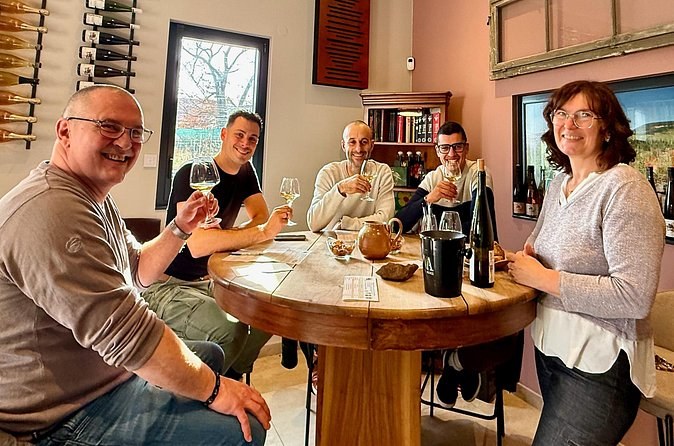
Cellar tour & tasting of organic wines with a feminine touch
One hour in a family cellar at Gueberschwihr and seven organic wines; you get there yourself, by car or by bus.
From $19 per person
Check AvailabilityNine glasses in ten poured in Alsace are white, and the grape is written on the label. Before you book a wine tasting tour Colmar, here is what the three appellations mean, what a Grand Cru is, and what each tour here pours, or does not.
Alsace works with three appellations, and the CIVA, the region's wine council, sets them out. AOC Alsace covers the everyday wine of the region. AOC Crémant d'Alsace covers the sparkling wine. AOC Alsace Grand Cru covers the named hillside sites.
Ninety per cent of AOC Alsace wine is white, which tells you what your glass will hold most of the day. You will often meet all three appellations at one counter, from the same grower. A tasting usually climbs from the everyday wine to the grand cru, and your host will tell you which is which as you go.
There are 51 Alsace Grands Crus. Each is a delimited vineyard site on a hillside, and each became its own appellation in 2011, so the site's name goes on the label. Together they make 4% of Alsace production, which is why a grand cru costs more at the counter.
Four grapes are generally permitted in a Grand Cru: Riesling, Muscat, Pinot Gris and Gewurztraminer. The villages the tours reach sit under several of them. Eguisheim has Eichberg and Pfersigberg; Riquewihr has Schoenenbourg and Sporen, and a Riquewihr wine tasting is the way to meet them in the glass. The tours stop in the villages, not on the slopes, so you see the crus from the lanes below.
Alsace labels its wine by grape, which is unusual in France and makes a tasting easy to follow. Seven names cover most of what you will see on a list. Four are grand-cru grapes; the other three are everyday Alsace, and you will usually meet them first.
| Grape | Allowed in a grand cru | Colour | Named on these tours |
|---|---|---|---|
| Riesling | Yes | White | Not named by grape on any listing here; ask at the counter |
| Gewurztraminer | Yes | White | The 4 Wonders small-group day names it |
| Pinot Gris | Yes | White | The 4 Wonders small-group day names it |
| Muscat | Yes | White | A reviewer of the private three hours recommends it |
| Sylvaner | No | White | Not named on any listing here |
| Pinot Blanc | No | White | Not named on any listing here |
| Pinot Noir | No | Red | Not named on any listing here |
This is the question the whole site turns on: the tasting is not always in the fare. Most tours put it in the price, and three do not. Read your tour's row before you book.
| Tour | What it pours | Tasting |
|---|---|---|
| Cellar tour and tasting at Gueberschwihr | Seven organic wines from single-vineyard selections, two terroirs compared | In the fare |
| Full day, three winery tastings | Three winery tastings, owners and winemakers pouring | In the fare |
| Half day, two winery tastings | Two winery tastings | In the fare |
| ICONICS half day, two villages and a tasting | One independent winemaker's cellar | In the fare |
| The Emblematic: villages and the castle | One winemaker's cellar | In the fare |
| 4 Wonders private day | A wine tasting stop | In the fare |
| Private wine day from Basel | Family-owned wineries | In the fare |
| 4 Wonders small-group day | A local wine cave | At your own expense |
| Villages half day, no tasting | None | Tasting fees are extra |
| Private Wine Route highlights in three hours | Cellars are one choice among villages | No tasting named |
Domaine Gueth pours the most in one place: you choose seven organic wines from single-vineyard selections and compare two terroirs, in an hour, for $19. Muriel Gueth, who pours, is the seventh generation of winegrowers on the estate. For range across a day, the Ophorus full day stops at three wineries, where owners and winemakers pour.
Crémant d'Alsace is the region's sparkling wine, and it holds its own appellation beside AOC Alsace and the Grands Crus. No listing here promises one by name. Most growers make one, though, so if you want bubbles, say so at the start of your tasting rather than the end.
The same applies to anything you have come for. Every tasting here is poured by a person, and growers are used to the question. On a private day, tell the driver when you book, and the route can be built around the cellar that makes it.
You stand or sit at a counter, a grower or a member of the family pours, and you are told what each wine is. Tastings on these tours last from under an hour to about 70 minutes: the Emblematic's cellar stop is 70 minutes, the ICONICS winery an hour, Domaine Gueth the whole hour including the cellar.
Eat first. The Ophorus listings warn that snacks are not usually served with a tasting in France, to keep the wine's flavour clean, and Alsace Safari does not allow food in the van. Domaine Gueth is the exception, with a pretzel and a few crackers. If you are driving yourself, you cannot taste and drive, which is the reason these tours exist.
Most wine tours here pour in the fare and drive you between the cellars, so nobody in your party has to stay sober for the road.
You can buy at every cellar you visit, usually at the grower's own price. Domaine Gueth sells what you taste on site or delivers it to your home, which solves the suitcase problem. Nobody on these tours obliges you to buy.
If you are flying, check your airline's liquid and baggage allowance before you buy a case: bottles go in the hold, not the cabin. The villages the cellars sit in are on the wine villages page.
The three appellations, the 90% white figure, the 51 Grands Crus, the 2011 change and the four grand-cru grapes are the CIVA's own, published at vinsalsace.com. What each tour pours, and which grapes a listing or reviewer names, comes from the tour's own listing. The village crus are from Les Plus Beaux Villages de France, which lists Eguisheim, Riquewihr and Hunawihr.
One hour in a family cellar at Gueberschwihr and seven organic wines; you get there yourself, by car or by bus.
From $19 per person
Check Availability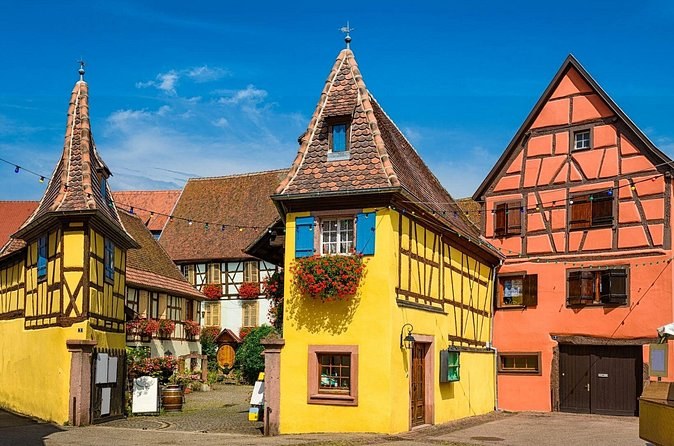
Three winery tastings in three villages, time for lunch in one, eight seats, adults only, from the CGR cinema at 9:30am.
From $187 per person
Check Availability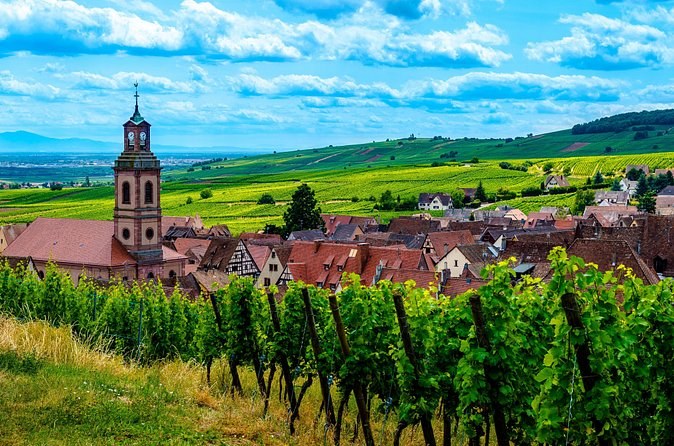
Two family wineries and two tastings in four hours from the CGR cinema; adults only, and no snacks with the wine.
From $114 per person
Check AvailabilityNext: see the villages on the wine villages page, plan around a museum on things to do, or compare every tour on Colmar Wine Tours.