11 Colmar Wine Facts That Will Surprise You
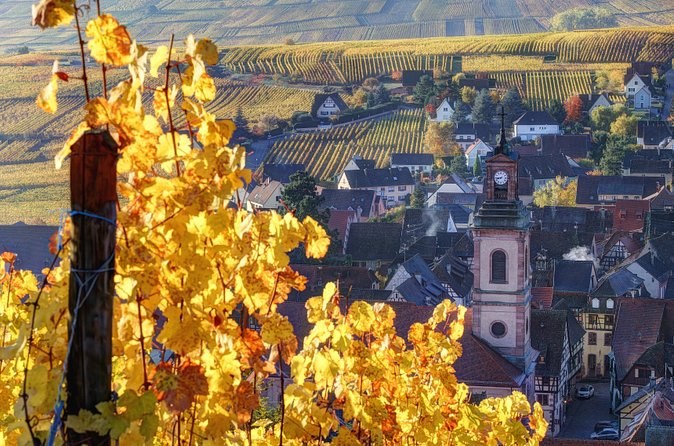
The short answer. Alsace is a white-wine region first, with 51 grand cru vineyards and a wine road that opened in 1953. Colmar sits in the middle of it, holds its wine fair each summer, and gave the world the man who designed the Statue of Liberty. Here are eleven facts, each with what it changes about your day.
The wine
1. Nine bottles in ten are white
Under the Alsace appellation, 90% of the wine is white. That surprises visitors who think of France as red-wine country. It also tells you what to expect in the glass: on a tasting here, a red is the exception. The grapes are laid out on the Alsace wines page.
2. There are 51 grands crus
Alsace has 51 Grand Cru vineyards, each with its own name and its own boundaries. Since 2011 every one has been an appellation in its own right. When a grower tells you the name of a hillside, that is why it matters.
3. Grand cru is only about 4% of the wine
For all that fame, grand cru wine makes up around 4% of Alsace production. If you are poured one, you are tasting a small slice of the region. Ask for it by name.
4. Only four grapes are generally allowed
Riesling, Muscat, Pinot Gris and Gewurztraminer are the four varieties generally permitted in a grand cru. Other grapes grow here, but these four carry the top labels. Know them and you can read most wine lists in Colmar. Other grapes you may meet at a tasting, such as Pinot Blanc or Sylvaner, usually carry the regional appellation.
5. There are three appellations, and one sparkles
AOC Alsace, AOC Alsace Grand Cru and AOC Crémant d'Alsace. The third is sparkling wine, made in the region. If a cellar opens your tasting with bubbles, this is what you are drinking.
The road
6. The wine road opened in 1953
The Alsace Wine Route was inaugurated in 1953. It is one of the oldest wine routes in France, not the oldest, whatever a brochure tells you. It runs for more than 170 km through 119 communes, from Marlenheim in the north to Thann in the south. A day tour from Colmar covers a short middle stretch of it, which is where the best-known villages sit. You will not drive the whole road in a day, and you do not need to.
7. The famous villages are close
From Little Venice, Eguisheim is 5.3 km as the crow flies, Kaysersberg 10.1 km and Riquewihr 11.1 km. That is why a half day can reach two villages and a cellar. The villages themselves are described on the wine villages page, and plotted for you on the map.
8. Kaysersberg was voted France's favourite village
In 2017, Kaysersberg won the French public's vote for Favourite Village. Expect it to be busy, and go early if you are walking it on your own. On a tour, the guide picks the time, so you see it without planning round the crowds. Both 4 Wonders days stop here, and so does the private three-hour run.
Colmar
9. The man behind the Statue of Liberty was born here
Auguste Bartholdi, who designed Liberty Enlightening the World, was born in Colmar. His birthplace is now the Musée Bartholdi, at 30 rue des Marchands. It opens Tuesday to Sunday, 10:00am to 12:00pm and 2:00pm to 6:00pm, and closes on Mondays. The museum is a short walk from all three tour kerbs, so it fits the morning before an afternoon half day.
10. The wine fair reaches its 77th edition
The Foire aux Vins d'Alsace in Colmar reaches its 77th edition in 2026, running from 31 July to 9 August. Seventy-seven editions is a long run for a summer fair. If your trip falls in those ten days, book your wine day early, because the town fills up.
11. Nobody serves snacks with the wine
In France, snacks are not usually served at a tasting, so they do not blur the flavour of the wine. Ophorus puts this in writing, and Alsace Safari goes further: no eating in the van. It surprises first-timers more than any other rule, so eat before you board.
The eleven, and what each one changes for you
| Fact | What it means on the day |
|---|---|
| 90% white | Expect white in the glass; red is rare |
| 51 grands crus | Ask the grower which hillside a wine is from |
| 4% grand cru | A grand cru pour is a small share of the region |
| Four grand cru grapes | Riesling, Muscat, Pinot Gris, Gewurztraminer |
| Three appellations | A sparkling opener is Crémant d'Alsace |
| Route opened 1953 | More than 170 km; you see a short stretch |
| Villages 5 to 14 km away | Two villages fit in a half day |
| Kaysersberg, 2017 favourite | Busy; arrive early on your own |
| Bartholdi's birthplace | Closed Mondays; fit it round your tour |
| 77th wine fair | 31 July to 9 August 2026; book early |
| No snacks with tastings | Eat first, every time |
Two more things you will hear on the day
Guides fill the drive between villages with stories, and two come up on nearly every day. Eguisheim is built in rings round its centre, and holds relics of Pope Saint Leo IX. Hunawihr's church stands fortified in the vines, with frescoes of Saint Nicholas from the 15th century inside, and the village keeps a park where storks were brought back. You can read more about both on things to do around a tour.
- Eguisheim's concentric lanes make it easy to walk in circles; follow the outer ring.
- Hunawihr's fortified church is the photograph from the vines above the village.
- Riquewihr's 13th-century gate tower is the one every guide points out.
See it for yourself
Every fact above is easier to feel than to read. The 4 Wonders small-group day walks Eguisheim, Kaysersberg, Ribeauvillé and Riquewihr; the tasting there is paid at the cave. The Ophorus half day pours two tastings in four hours, adults only. If you want the castle too, compare it in the castle or wine day guide. Every day is compared, fare by fare, on the Colmar Wine guided tours page.
Days that bring these facts to life
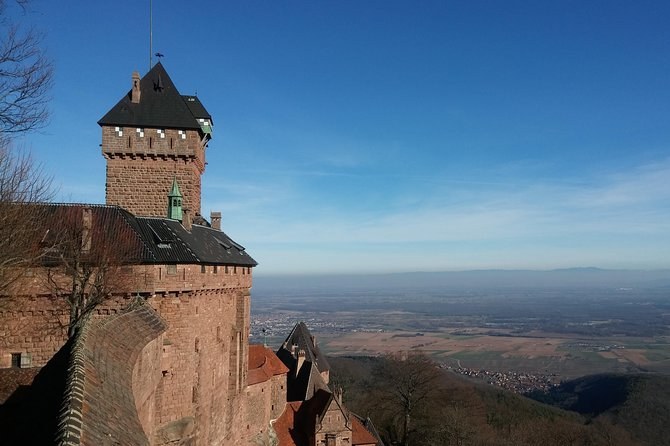
The Emblematic: visit of villages, Haut-Koenigsbourg, Wine tasting
Hunawihr, Riquewihr, Ribeauvillé and a tasting, plus the castle on days when its visitor numbers allow; entry is in the fare when the stop happens.
From $193 per person
Check Availability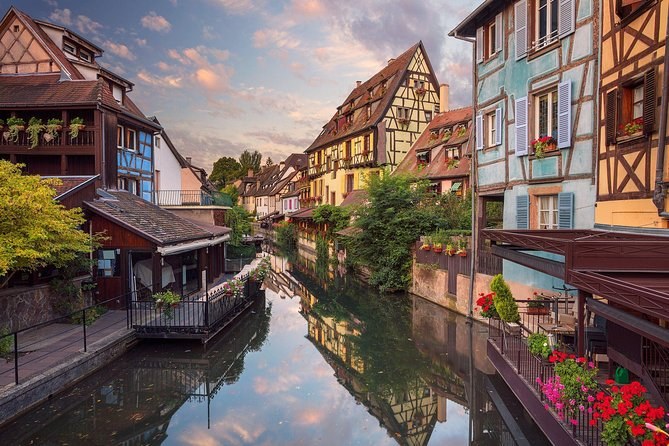
Alsace 4 Wonders Private Full Day Trip
The same four villages for your party alone, up to eight in one car, collected from your address, tasting included.
From $790 per group, up to 8
Check Availability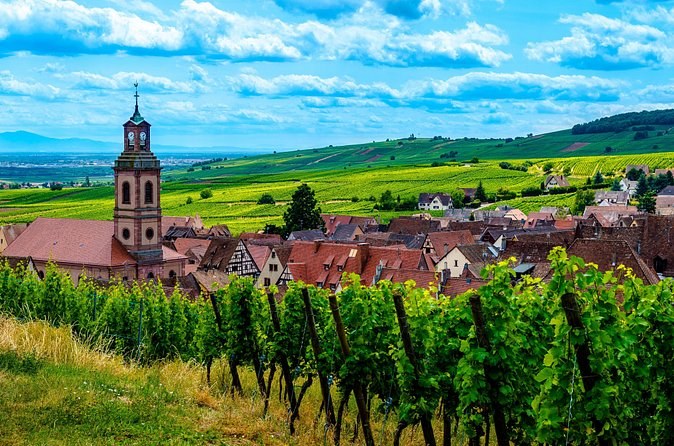
Alsace Half Day Wine Tour from Colmar
Two family wineries and two tastings in four hours from the CGR cinema; adults only, and no snacks with the wine.
From $114 per person
Check AvailabilityNext: Travelling alone? Read the solo traveller guide. Every fare sits side by side on Colmar Wine Tours.